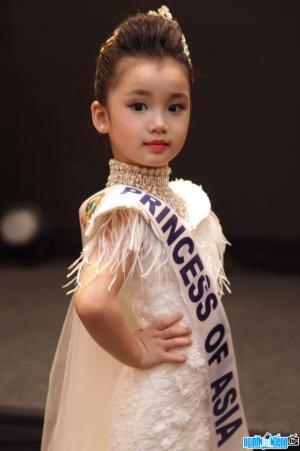
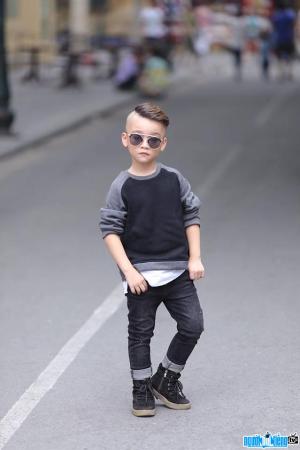
Child model Sumi Hoang Kim
Sumi Hoang Kim
Living place: Ho Chi Minh
Birthday: 1-1-2013 (13 years old)
Population of Vietnam 2013: 89,71 millions
Global rank: #75750
Facebook: facebook.com/Model.SumiHoangKim
Email: huynhlam0503@gmail.com
Phone number: updating
Sumi Hoang Kim's full name is Nguyen Doan Hoang Kim, born in 2013 in city. Ho Chi Minh. From an early age, she soon showed artistic talent, especially the ability to perform in front of crowds, stage expressions and good aesthetic thinking. Currently, Hoang Kim is not only known as a child model but also as a child MC, working in parallel in many fields of art and fashion.
The fate came to art very early
Before becoming known to the public on the catwalk, Hoang Kim attracted attention when participating in hosting skills classes. With encouragement from her family, the girl boldly tried her hand at many art playgrounds for children and quickly showed outstanding qualities.
The year 2022 is considered an important milestone when Hoang Kim excellently won runner-up in the "Child MC Talent Search" contest. This achievement not only helps her gain more attention but also opens the door to comprehensive development in the field of performing arts.
Outstanding mark in child model career
In parallel with the role of MC, Hoang Kim soon fell in love with fashion and quickly affirmed his position in the child model industry Vietnam. She continuously participates in major programs, competitions and catwalks for children.
In just a short time, Hoang Kim has achieved many notable achievements such as runner-up Ninh Khuong Model Kids 2022, Model Kids Talent 2023. These awards are clear evidence of her catwalk skills, ability to master the stage as well as her serious spirit towards her profession.
Not stopping at domestic playgrounds, Hoang Kim also made a mark on the international arena when excellently receiving The Best People's Choice Award 2024 at Beauty Fashion Week held in Laos. This is an award voted by the audience, showing the attraction and love she receives from the community.
The face that designers trust
With a confident demeanor and the ability to convey the spirit of good clothing, Hoang Kim is constantly chosen to take on important positions on the catwalk. The girl who used to be the First Face opened many collections at major fashion events such as Vietnam Iconic Runway, Ocean Fashion Show or Ocean Fest Fashion Show.
In addition, Hoang Kim also takes on the role of vedette - the main model position - at many large-scale shows, showing the trust the designers have in a very young child model. Regularly being assigned important roles helps her gain experience and increasingly perfect her performance skills.
Learning in parallel with artistic activities
Despite his active artistic activities, Hoang Kim still focuses on learning culture. She is currently studying at the Vinschool school system, which creates conditions for students to comprehensively develop both knowledge and soft skills. The family always accompanies and guides Hoang Kim to balance her studies and passion for art, helping her develop at the right age and maintain the innocence needed for a child.
With a solid foundation, serious thinking and methodical investment, Hoang Kim is considered one of the promising child models of Vietnamese fashion. Not only stopping at the catwalk, she also has the ability to expand into fields such as professional hosting, performing arts and participating in age-appropriate creative projects.
Close relationship
Updating!
Height: updating
Weight: updating
Measurements: updating
Sumi Hoang Kim birthday 1-1-2013 (at the age of 13).
Where is Child model Sumi Hoang Kim's birth place, what is Zodiac/Chinese Zodiac?
Sumi Hoang Kim was born in Ho Chi Minh, of Vietnam. Em, whose Zodiac is Capricorn, and who Chinese Zodiac is The Dragon. Sumi Hoang Kim's global rank is 75750 and whose rank is 21 in list of famous Child model. Population of Vietnam in 2013 is about 89,71 millions persons.
/
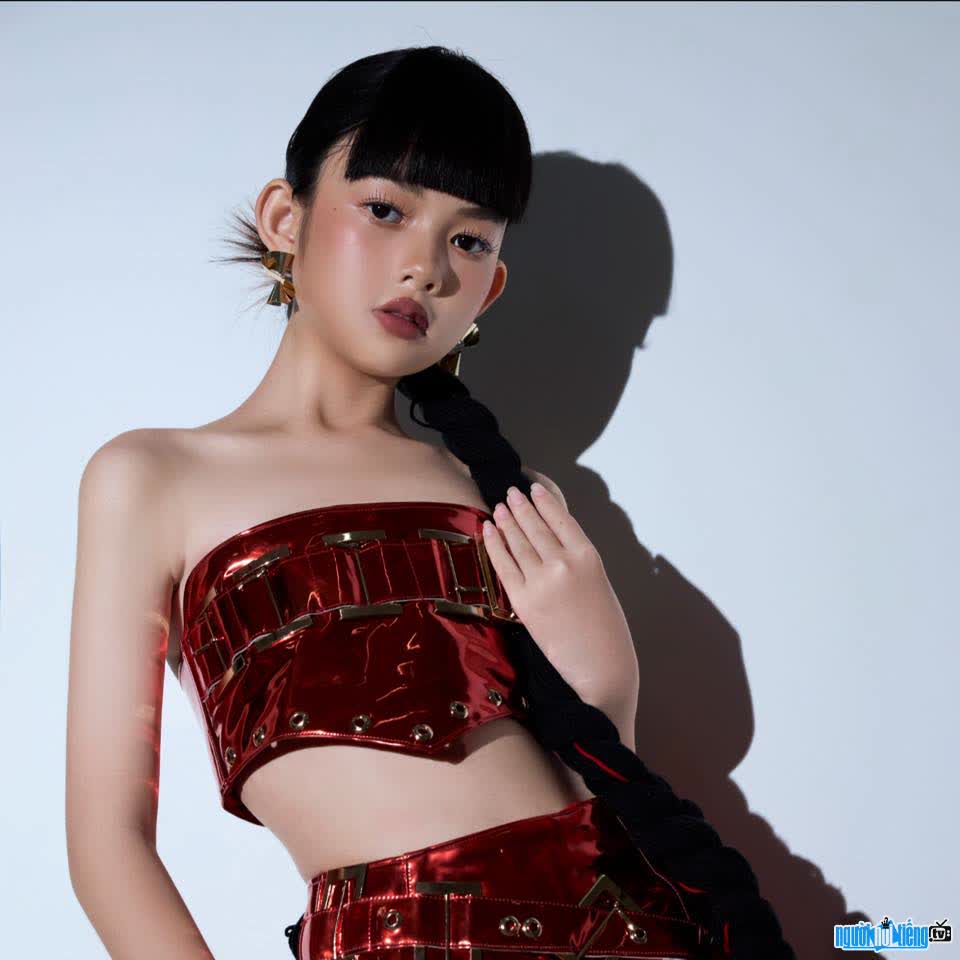
Pictures of child model Sumi Hoang Kim

Pictures of cute and adorable Sumi Hoang Kim
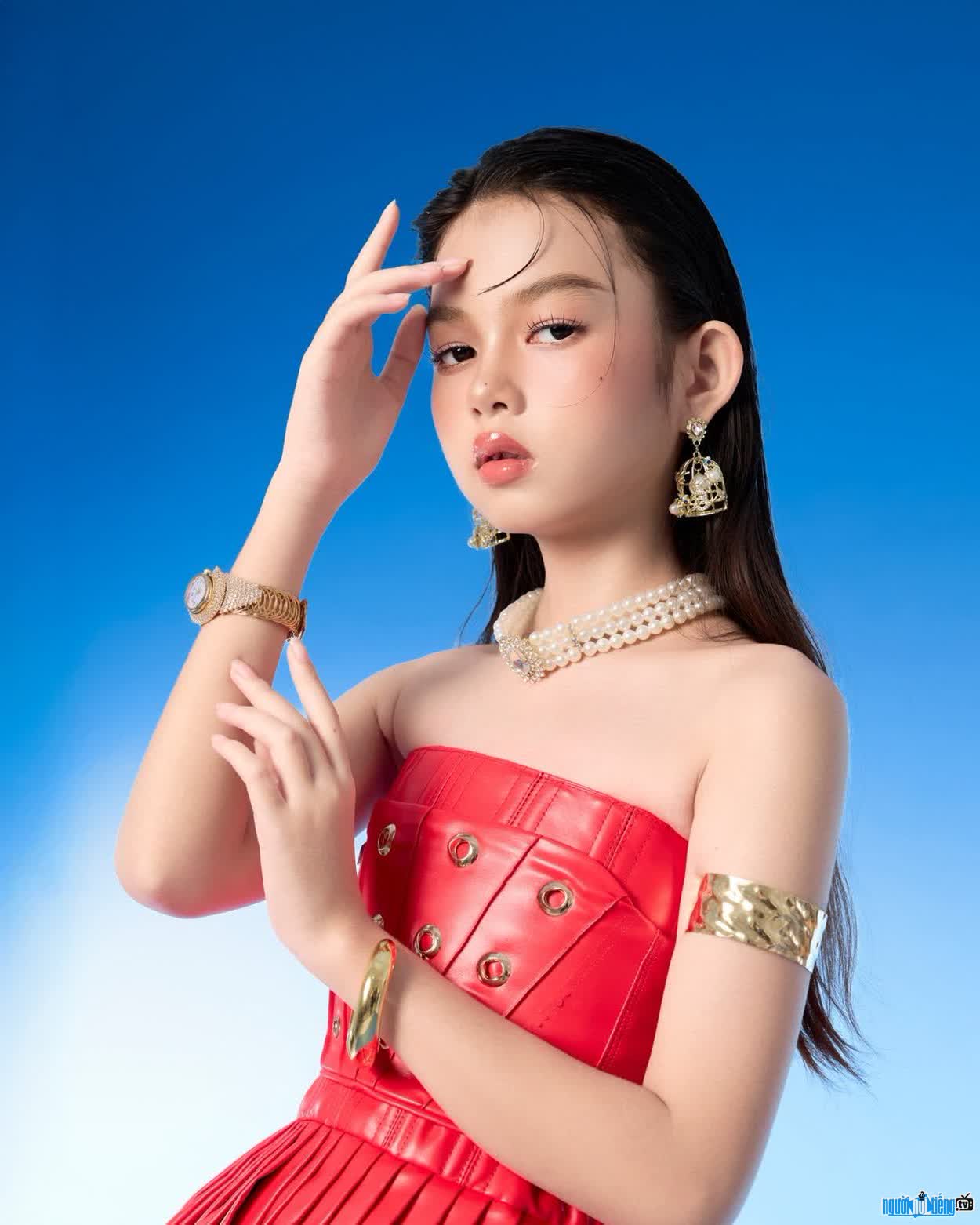
Latest pictures of child model Sumi Hoang Kim
Top famous Child model
Top famous Zodiac of Capricorn
Top famous Chinese Zodiac of The Dragon
Top celebrities born in 2013
Top celebrities born in January
Top celebrities born in 1st
Born in Ho Chi Minh
Comment:
Cotent:
Events in 2013 and 1-1
Events in the world in the birth year of Sumi Hoang Kim
- Jan. 1: France sends its military forces to Mali to fight against extreme Islamist militants. (Jan. 16): Islamist militants take about 40 foreign hostages at a remote BP site in Algeria. Many fear that the hostage situation is a result of the conflict in Mali.
- Jan. 22: Israeli prime minister Benjamin Netanyahu is elected to a third term.
- Jan. 25: Violent protests erupt throughout Egypt on the second anniversary of the revolution. Demonstrators focus their ire on the Muslim Brotherhood and the government of President Mohammed Morsi, frustrated that the country is on an ideologically conservative path and that Morsi has failed to bolster the economy or fulfill promises to introduce broader civil liberties and social justice. Dozens of people are killed in the violence. Morsi declares a state of emergency in three large cities: Suez, Ismailia, and Port Said.
- Feb. 11: Pope Benedict XVI announces his retirement, becoming the first pope to do so since 1415. He cites advancing age and a growing physical weakness as his reasons for retirement. He steps down on Feb. 28.
- Feb. 12: North Korea says it has detonated a third nuclear bomb. Earlier nuclear tests were conducted in 2006 and 2009.
- Feb. 14: South African runner Oscar Pistorius is arrested after police find his girlfriend, Reeva Steenkamp, dead from multiple gunshot wounds in his apartment. He is later charged with premeditated murder.
- March 5: Hugo Chavez, the president of Venezuela , dies of cancer at age 58. He had been in office for 14 years.
- March 8: In response to North Korea's nuclear test in February 2013, the UN Security Council unanimously passes another round of strict sanctions against North Korea. In a first, China is involved in drafting the sanctions. In response, North Korean president Kim Jong-un promises to launch "a pre-emptive nuclear strike" against the U.S. and South Korea and says he has voided the 1953 armistice that ended the war between North and South Korea.
- March 13: Cardinal Jorge Mario Bergoglio of Argentina is elected as the new pope, succeeding Benedict XVI. Bergoglio, 76, becomes the Catholic Church's 266th pontiff. He is the first pope from Latin America and the first Jesuit pope. He chooses the name Francis.
- March 14: Xi Jingping assumes the presidency of China. Of the 2,956 delegates, only one votes against Xi. He had earlier been named chairman of the Central Military Commission and general secretary of the Communist Party.
- April 1: Despite stiffer sanctions from the UN, North Korean president Kim Jong-un announces plans to expand his country's nuclear weapons and strengthen the economy. Kim prohibits South Korean workers from entering the Kaesong industrial park, which is run jointly by the two countries and is located in North Korea. Apr. 3: At a rare plenary meeting of the Central Committee, Kim says North Korea will continue to develop its nuclear weapons program despite sanctions and restart the mothballed nuclear facility in Yongbyon. Apr. 4: The U.S. announces it is deploying a missile defense system to Guam as a precautionary move.
- April 1: Despite stiffer sanctions from the UN, North Korean president Kim Jong-un announces plans to expand nuclear weapons and strengthen the economy in his country. Kim prohibits South Korean workers from entering the Kaesong industrial park, which is run jointly by the two countries and is located in North Korea. Apr. 3: At a rare plenary meeting of the Central Committee, Kim says North Korea will continue to develop its nuclear weapons program despite sanctions and restart the mothballed nuclear facility in Yongbyon. Apr. 4: The U.S. announces it is deploying a missile defense system to Guam as a precautionary move.
- April 13: Palestinian prime minister Salam Fayyad resigns amid infighting among the top echelon of the Palestinian Authority and popular discontent. Fayyad is credited with cracking down on corruption in the West Bank, improving infrastructure, and boosting the economy, which resulted in an increase in international aid.
- April 14: Nicolas Maduro wins the special presidential election in Venezuela the successor of Hugo Chavez. He takes office on April 19.
- April 18: Diplomats from both Britain and France report to the United Nations that there is credible information that the government in Syria has used chemical weapons recently in its civil war. According to both diplomats, the Syrian government has used chemical weapons multiple times since December 2012. Officials from Israel also say they have evidence that the Syrian government has used chemical weapons. President Obama has said that the use of chemical weapons by Syria's government could lead to a military response by the United States.
- April 24: A large building containing several factories in Bangladesh collapses, killing at least 900 people. Hundreds more are missing in the building's rubble. Known as Rana Plaza, the factories within the building make clothing for European and American retailers such as JC Penny, Cato Fashions, Benetton and others.
- May 31: In Istanbul, Turkey, a sit-in protesting government plans to raze Gezi Park in Taksim Square to build a shopping mall develops into enormous anti-government demonstrations after police begin spraying protesters with tear gas and water cannons. The demonstrations spread to dozens of cities throughout Turkey. June 13: Police storm the park, again spraying protesters with tear gas and water, and force protesters out of the area.
- June 4: A human rights team working for the United Nations reports that there are "reasonable grounds" to believe that government forces in Syria have used chemical weapons. French foreign minister Laurent Fabius reports that sarin, a nerve gas, has been used on multiple occasions.
- June 9: Edward Snowden, a former CIA employee, admitted that he was the source of leaks about the top-secret surveillance activities of the National Security Agency. June 21: The U.S. government filed espionage and theft charges against Snowden, who had earlier fled to Hong Kong. The government also requested that Hong Kong extradite Snowden. June 23: Fighting extradition, Snowden traveled from Hong Kong to Moscow.
- June 15: Hassan Rowhani, a moderate cleric and Iran's former negotiator on nuclear issues, wins Iran's presidential election, taking just under 51% of the vote.
- June 18: The Afghan National Security Force assumes complete responsibility for the security of the country, taking over the last areas under NATO control.
- June 26: Australian prime minister Julia Gillard resigns after being ousted as Labor Party leader in a party vote. Former Prime Minister Kevin Rudd replaces her as party leader and, the following day, replaces her as prime minister.
- June 30: On the first anniversary of President Mohammed Morsi's inauguration, as many as one million people take to the streets in planned demonstrations throughout Egypt and call for the president to step down. Their complaints against Morsi include the dismal state of the economy, Morsi's installation of members of the Muslim Brotherhood into many positions of power, as well as his failure to stem the sectarian divide between Sunnis, Shiites, and Christians, among other issues.
- July 4: The military deposes Egyptian president Mohammed Morsi and suspends the constitution, saying the move is an attempt at "national reconciliation" rather than a coup. Morsi, however, calls it a "complete military coup." He is taken into custody and several members of his inner circle are placed under house arrest. The move sparks massive protests in support of Morsi.
- July 22: Catherine, Duchess of Cambridge, gives birth to a baby boy. The baby is born at 4:24 p.m. and weighs 8 pounds 6 ounces. He is later named George Alexander Louis. He will also have the title His Royal Highness Prince George of Cambridge and is be third in line to the throne, following Prince Charles and Prince William.
- July 30: Israeli and Palestinian negotiators agree to begin new peace talks with the goal of reaching an agreement within nine months. The negotiations will be mediated by Martin Indyk, the U.S. State Department's new Mideast peace envoy.
- Aug. 1: Russia grants Edward Snowden, the American who leaked info about U.S. surveillance, asylum for one year. The temporary asylum allows him to leave the Moscow airport where he has been since June.
- Aug. 14: Police raid camps in Cairo, Egypt, where protesters have been demonstrating since the July ouster of President Mohammed Morsi. More than 500 people are killed, and the government declares a state of emergency. Mohamed ElBaradei resigns as vice president in protest of the military's action.
- Aug. 14: Israelis and Palestinians officially begin peace talks in Jerusalem. Expectations are low going into the talks, the third attempt to negotiate since 2000, and nearly five years since the last attempt. The talks begin just hours after Israel releases 26 Palestinian prisoners.
- Aug. 21: Opposition groups accuse the Syrian government of attacking rebel areas in Zamalka, Ein Terma, and Erbeen, suburbs east of Damascus, with chemical weapons. Gruesome, graphic images in the media show victims foaming at the mouth and twitching and lines of covered corpses. The opposition say as many as 1,000 people died in the attack. The government denies it used chemical weapons.
- Sep. 1: President Barack Obama announces that he will seek Congressional approval for military action against Syria in response to its alleged attack with chemical weapons on civilians. Sep. 4: The U.S. Senate Foreign Relations Committee votes, 10 to 7, to authorize military action in Syria. Sep. 15: A U.S.-led military attack is averted and diplomacy prevails when Russia and the U.S. reach an agreement that Syria must provide an inventory of its chemicals weapons and production facilities within a week and either turn over or destroy all of its chemical weapons by mid-2014. If the government fails to comply, then the UN Security Council will take up the issue.
- Sep. 16: The UN confirms in a report that the chemical agent sarin was used near Damascus on Aug. 21. "Chemical weapons have been used in the ongoing conflict between the parties in the Syrian Arab Republic, also against civilians, including children, on a relatively large scale," the report says. Sep. 26: The five permanent members of the Security Council agree on a resolution that requires Syria to hand over its stockpile of chemical weapons. If Syria fails to comply, then the Security Council will reconvene to determine repercussions, which could include military action or sanctions.
- Sep. 21: Shabab militants, based in Somalia, attack an upscale mall in Nairobi, Kenya, killing nearly 70 people and wounding about 175.
- Sep. 22: Chinese politician Bo Xilai is sentenced to life in prison. Eastern China's Jinan Intermediate People's Court finds him guilty of embezzlement, accepting bribes, and abuses of power, including a failed attempt to stifle the murder allegations against his wife.
- Oct. 5: U.S. commandos capture Nazih Abdul-Hamed al-Ruqai, a high-ranking al-Qaeda operative who is known as Abu Anas al-Libi, in Tripoli, Lebanon. He was indicted for helping plan the 1998 bombings of the U.S. Embassies in Kenya and Tanzania.
- Oct. 18: Saudi Arabia declines a non-permanent seat on the Security Council, a position it had been working toward for several years. The unprecedented move stuns both the UN and U.S. diplomats. "Allowing the ruling regime in Syria to kill and burn its people by the chemical weapons, while the world stands idly, without applying deterrent sanctions against the Damascus regime, is also irrefutable evidence and proof of the inability of the Security Council to carry out its duties and responsibilities," the Saudi ambassador to the UN says in a statement.
- Nov. 1: Hakimullah Mehsud, the leader of the Taliban in Pakistan, is killed in a CIA drone strike in Danday Darpa Khel, a militant stronghold in North Waziristan. It is an important victory over the Taliban for the U.S.
- Nov. 1: The trial of deposed Egyptian president Mohammed Morsi on charges of inciting the murder of protesters opens briefly in Cairo, but is adjourned until January 2014.
- Nov. 24: Iran reaches a six-month deal with the five permanent members of the UN Security Council and Germany to scale back its nuclear program. Iran agrees to halt production of uranium beyond 5 percent, which means it could only produce uranium for peaceful purposes; dilute or convert to oxide its stockpile of uranium enriched to 20 percent; not install new centrifuges; give UN inspectors daily access to enrichment facilities at Natanz and Fordo. In return, the crippling sanctions against Iran will be eased, pumping between $6 billion and $7 billion back into Iran's economy.
- Dec. 1: Hundreds of thousands of protesters in Kiev, Ukraine, demand that President Viktor Yanukovich resign. The protesters also call for the country to develop stronger ties to Europe and the West and move away from Russia. The protests started earlier after Yanukovich refused to sign political and free trade agreements with the European Union under pressure from Russia.
- Dec. 5: Nelson Mandela dies at age 95, after a lung infection and several months of ill health.
Birthday Sumi Hoang Kim (1-1) in history
- Day 1-1 year 1863: Abraham Lincoln issued the Emancipation Proclamation.
- Day 1-1 year 1908: The ball signifying the New Year was dropped for the first time at Times Square in New York City.
- Day 1-1 year 1914: The world's first airline, St. Petersburg Tampa Airboat Line, starts operation in St. Petersburg, Florida.
- Day 1-1 year 1959: Fidel Castro and his revolutionaries took over Cuba and toppled Fulgencio Batista's regime.
- Day 1-1 year 1975: John Mitchell, H. R. Haldeman, and John Ehrlichman were convicted of obstruction of justice in the Watergate affair.
- Day 1-1 year 1993: Czechoslovakia peacefully split into the Czech Republic and Slovakia.
- Day 1-1 year 1994: The North American Free Trade Agreement (NAFTA) went into effect.
- Day 1-1 year 2002: Euro coins and notes went into circulation in twelve European nations.