Football player Dau Hong Phong
Dau Hong Phong
Living place: Vietnam
Birthday: 2-9-2008 (18 years old)
Population of the world 2008: 6.7 billions
Global rank: #87239
Facebook: facebook.com/hong.phong.455065
Email: updating
Phone number: updating
In the current U17 Vietnam squad, a name is attracting special attention from experts and fans, Dau Hong Phong. With a smart game, the ability to control the ball flexibly and the spirit of fire, he is gradually asserting himself as one of the most promising central midfielders of the younger generation.
Initially conquering the pitch
Born in 2008, Hong Phong started her football journey from very young days. Right from the age of 10, Hong Phong has reached the top 10 best young talents in the enrollment organized by the Juventus Academy. The passion and relentless effort helped him to catch the eye of the scouts soon, and quickly joined the young Hanoi Club-one of the leading football training centers Vietnam .
Shine at the National U17 tournament
2024 marked an important milestone in Hong Phong's career when he and the U17 Hanoi team won the U17 National Football Championship. Not only contributing greatly to the overall achievement of the team, he was also honored as the "Best Player of the tournament" thanks to his impressive performance and great match coordination.
Outstanding contributions to U17 Vietnam shirt
In the national U17 team shirt, Hong Phong continues to show its important role. In the U17 Asian Finals 2025, he was trusted by the head coach Cristiano Roland to be tasked with the central midfielder - where he maximized the ability to support both defense and attack. The flexibility in the gameplay and the ability to adapt quickly to the team's tactics helped him become an indispensable link in the squad.The awards he achieved
- The best player of the National U17 National Tournament 2024
- The U17 National Football Championship with the Hanoi Club: During the tournament, he is the middle pillar, keeping the game rhythm and creating many dangerous attack situations. 2025
The spirit of competition and the desire to devote
Not only stands out in terms of expertise, Hong Phong is also appreciated by the spirit of determination and desire to contribute. Ahead of the match against U17 Australia, he shared: "The whole team will unite to win. We always yearn to win all 3 points in each match."
With what has shown, Hong Phong is expected to continue developing and becoming the mainstay of Vietnamese football in the future. The combination of personal techniques, tactical thinking and professional spirit is a solid foundation for him to go further on his career path.
Close relationship
Updating!
Height: updating
Weight: updating
Measurements: updating
Dau Hong Phong birthday 2-9-2008 (at the age of 18).
Where is Football player Dau Hong Phong's birth place, what is Zodiac/Chinese Zodiac?
Dau Hong Phong was born in Vietnam. Mr, whose Zodiac is Virgo, and who Chinese Zodiac is The Rat. Dau Hong Phong's global rank is 87239 and whose rank is 4922 in list of famous Football player. Population of the world in 2008 is about 6.7 billions persons.
/
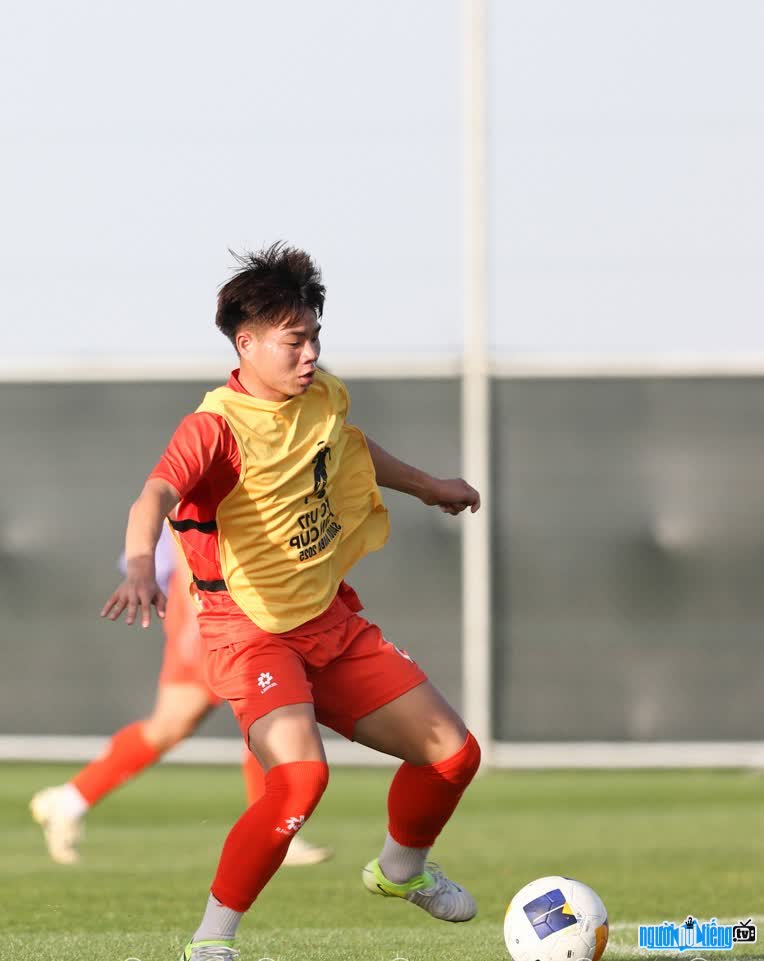
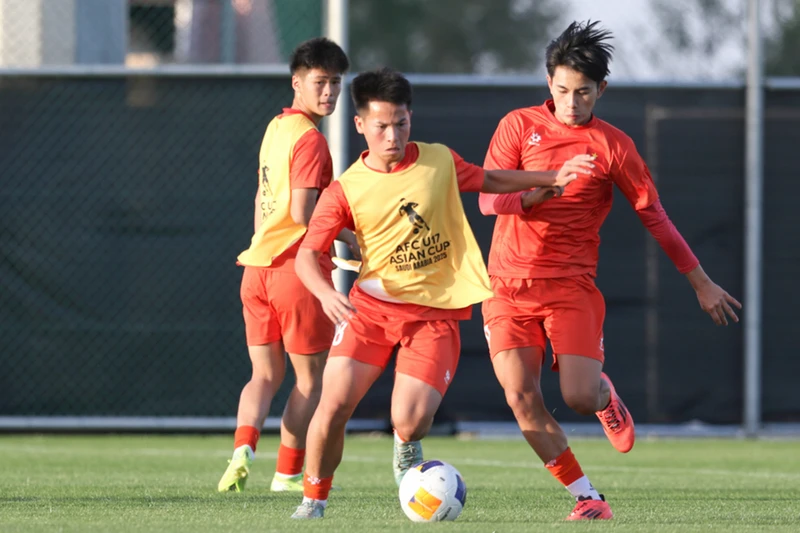
Pictures of young players with Hong Phong
the image of Hong Phong dean
Top famous Football player
Top famous Zodiac of Virgo
Top famous Chinese Zodiac of The Rat
Top celebrities born in 2008
Top celebrities born in September
Top celebrities born in 2nd
Comment:
Cotent:
Events in 2008 and 2-9
Events in the world in the birth year of Dau Hong Phong
- Jan. 1–31: Tribal violence erupts in Kenya after December 2007's presidential election between Raila Odinga, of the Orange Democratic Movement, and incumbent president Mwai Kibaki. More than 800 people die in violence across the country. Preliminary results had Odinga defeating Kibaki, 57% to 39%. In the days after the election, however, Odinga's lead dwindled and Kenya's electoral commission declared Kibaki the winner, 46% to 44%. International observers said the vote was rigged.
- Jan. 6: President of Georgia, Mikheil Saakashvili, is reelected, taking 52% of the vote. He had called for early elections in November 2007, after massive protests prompted by accusations that he abused power and stifled dissent.
- Jan. 31: Final report by an Israeli-government-appointed panel, the Winograd Commission, on Israel's 2006 war against the militant group Hezbollah in Lebanon, calls the operation a "large and serious" failure and criticizes the country's leadership for failing to have an exit strategy in place before the invasion.
- Feb. 10: Three men wearing ski masks steal four pieces of artwork from the Zurich Museum in one of the largest art robberies in history. In broad daylight, the robbers took a Cezanne, a Degas, a van Gogh, and a Monet, with a combined worth of $163 million. Feb. 18: Two of the paintings, the Monet and the van Gogh, are found in perfect condition in the backseat of an unlocked car in Zurich.
- Feb. 17: Kosovo's prime minister Hashim Thaci declares independence from Serbia. Serbian prime minister Vojislav Kostunica says he would never recognize the "false state." International reaction is mixed, with the United States, France, Germany, and Britain indicating that they plan to recognize Kosovo as the world's 195th country.
- Feb. 19: Cuban president Fidel Castro, who temporarily handed power to his brother Raúl in July 2006 when he fell ill, permanently steps down after 49 years in power.
- March 2: Dmitri A. Medvedev, a former aide to Russian president Vladimir Putin, wins the presidential election in a landslide. Putin will remain in a position of power, serving as Medvedev's prime minister.
- March 10: Some 400 Buddhist monks participate in a protest march in Lhasa, the capital of Tibet, to commemorate 1959's failed uprising against China's invasion and occupation of Tibet. March 14: Violence breaks out, with ethnic Tibetans clashing with Chinese citizens. Chinese police suppress the demonstrations, and Tibetan leaders say that more than 100 Tibetans are killed.
- April 2: Zimbabwe's Morgan Tsvangirai, of the opposition Movement for Democratic Change, says he won 50.3% of the vote in March 29's presidential election, defeating Robert Mugabe, who has been in power since 1980. April 14: The High Court of Zimbabwe dismisses the opposition's request for the release of election results. The government cracks down on the opposition.
- April 11: In Nepal, millions of voters turn out to elect a 601-seat Constituent Assembly that will write a new constitution. Maoist rebels win 120 out of 240 directly elected seats.
- May 2: More than a month after the presidential election, Zimbabwe officials announce that opposition candidate Morgan Tsvangirai, leader of the Movement for Democratic Change, defeated incumbent Robert Mugabe, 47.9% to 43.2%. A runoff election is necessary because neither candidate won more than 50%.
- May 28: Nepal's newly elected Constituent Assembly votes to dissolve the 239-year-old monarchy and form a republic. King Gyanendra is told he must step down within 15 days.
- June 19: Egypt brokers a cease-fire between Israel and Hamas, the militant group that controls the Gaza Strip. The agreement is intended to stem the violence in the region.
- June 22: Morgan Tsvangirai, of Zimbabwe's Movement for Democracy and Change, who was to face incumbent president Robert Mugabe in a runoff election, withdraws from the race, saying he could not subject his supporters to violence and intimidation. June 27: Mugabe wins the second round of the election, with about 85% of the vote.
- July 2: After being held for nearly six years by Revolutionary Armed Forces of Colombia (FARC) rebels in Colombia, 15 hostages, including three U.S. military contractors and French-Colombian politician Ingrid Betancourt, are freed by commandos who infiltrated FARC's leadership.
- July 14: Luis Moreno-Ocampo, the prosecutor of the International Criminal Court, formally charges Sudan's president, Omar Hassan al-Bashir, with genocide for planning and executing the decimation of Darfur's three main ethnic tribes: the Fur, the Masalit, and the Zaghawa.
- July 21: Radovan Karadzic, the Bosnian Serb president during the war in Bosnia in the 1990s, is arrested outside Belgrade and charged with genocide, persecution, deportation, and other crimes against non-Serb civilians. Karadzic orchestrated the massacre of almost 8,000 Muslim men and boys in 1995 in Srebrenica. July 30: Karadzic is transferred to The Hague to await trial.
- Aug. 7: Fighting breaks out after Georgian soldiers attack South Ossetia, a breakaway enclave in Georgia that won de facto independence in the early 1990s. Separatists in South Ossetia retaliate. Aug. 8: Russia enters the fray, with troops and tanks pouring into South Ossetia to support the region. Aug. 9 and 10: Russia intensifies its involvement, moving troops into Abkhazia, another breakaway region, and launching airstrikes at Tbilisi, the capital of Georgia. Aug. 13: France brokers a deal between Russia and Georgia. President George Bush sends U.S. troops on a humanitarian mission to Georgia. He warns Russia that if it doesn't observe the cease-fire, the country risks its standing in "the diplomatic, political, economic, and security structures of the 21st century." Aug. 29: Russia and Georgia sever diplomatic ties from each other. It is the first time Russia has cut off formal relations with one of its former republics, which gained independence in 1991.
- Aug. 7: Pakistan's governing coalition, led by Asif Ali Zardari, of the Pakistan Peoples Party, and Nawaz Sharif, leader of the Pakistan Muslim League-N, begins impeachment proceedings against President Pervez Musharraf on charges of violating the constitution and misconduct. Aug. 18: Musharraf resigns as president.
- Aug. 15: Nepal's Constituent Assembly elects Maoist leader Pushpa Kamal Dahal, known as Prachanda, as prime minister.
- Aug. 22: As many as 90 Afghan civilians, 60 of them children, die in an airstrike by coalition troops in the western village of Azizabad. It is one of the deadliest airstrikes since the war began in 2001, and the deadliest for civilians. The U.S. military refutes the figures, which were confirmed by the UN.
- Sep. 2: Thai prime minister Samak Sundaravej declares a state of emergency when protests between government supporters and the opposition, People's Alliance for Democracy (PAD), which is calling for Samak's resignation, turn violent. Sep. 9: Samak is forced from office when Thailand's Constitutional Court rules that he violated the constitution by being paid to appear on a cooking show. Somchai Wongsawat, the first deputy prime minister, becomes acting prime minister. Sep. 17: Parliament elects Somchai prime minister.
- Sep. 6: Asif Ali Zardari, leader of the Pakistan Peoples Party and the widower of former Pakistani prime minister Benazir Bhutto, wins 481 out of 702 votes in the two houses of Parliament to become president.
- Sep. 15: In Zimbabwe, President Robert Mugabe and opposition leader Morgan Tsvangirai, who defeated Mugabe 48% to 43% in March 2008 elections but boycotted the June runoff election because of voter intimidation, agree to a power-sharing deal. Tsvangirai will serve as prime minister and the opposition will control 16 ministries. The governing party will control 15; Mugabe will continue as president.
- Sep. 20: A truck bomb explodes outside the Marriott Hotel in Islamabad, Pakistan, killing more than 50 people and wounding hundreds. A previously unknown group, Fedayeen Islam, takes responsibility for the attack.
- Sep. 21: Israeli prime minister Ehud Olmert, who is under investigation for corruption, resigns.
- Sep. 24: Japan's Taro Aso, a conservative and former foreign minister, becomes prime minister, succeeding Yasuo Fukuda, who stepped down amid criticism of his handling of domestic issues.
- Oct. 1: The Iraqi government takes command of 54,000 mainly Sunni fighters from the U.S., which had been paying the fighters for their support. The fighters, members of awakening councils, turned against al-Qaeda in Mesopotamia in 2007 and began siding with the U.S.
- Nov. 16: Iraq's cabinet passes by a large margin a status of forces agreement that will govern the U.S. presence in Iraq through 2011. The pact calls for the withdrawal of all U.S. combat troops by Dec. 31, 2011, and the removal of U.S. troops from Iraqi cities by the summer of 2009. In addition, the agreement gives Iraqi officials increased jurisdiction over serious crimes committed by off-duty Americans who are off base when the crimes occur. Nov. 27: The Iraqi Parliament votes, 149 to 35, to approve the status of forces agreement. Dec. 4: The Presidencial Council, made up of Iraq's president and two vice presidents, gives final approval to the status of forces agreement.
- Nov. 26: More than 170 people are killed and about 300 are wounded in a series of attacks on several landmarks and commercial hubs in Mumbai, India. Indian officials say ten gunmen carried out the attack. It took Indian forces three days to end the siege. Deccan Mujahedeen, a previously unknown group, claims responsibility for the attacks. Pakistan officials deny any involvement in the attacks, but some Indian officials hint that they suspect Pakistani complicity.
- Dec. 2: Thailand's Constitutional Court ruling that the governing People Power engaged in fraud during the 2007 elections forces Prime Minister Somchai Wongsawat from power and bans party members from politics for five years. Dec. 15: Parliament elects Abhisit Vejjajiva, the head of the Democrat Party, as prime minister.
- Dec. 14: At a news conference in Baghdad, a reporter for Al Baghdadia, a Cairo-based satellite television network, hurls his shoes at President Bush and calls him a "dog." The shoes narrowly miss Bush's head.
- Dec. 22: Guinea's despotic president, Lansana Conte, dies after 24 years in power. Dec. 24: Junior army leaders launch a coup. Army captain Moussa Camara takes over as president of the republic.
- Dec. 28: Days after a cease-fire between Israel and Hamas expired, Hamas begins launching rocket attacks into Israel, which retaliates with airstrikes that kill about 300 people. Israel targets Hamas bases, training camps, and missile storage facilities.
Birthday Dau Hong Phong (2-9) in history
- Day 2-9 year 1666: A massive fire broke out in London, destroying much of the city, including St. Paul's Cathedral.
- Day 2-9 year 1789: The U.S. Treasury Department was established.
- Day 2-9 year 1901: Vice President Theodore Roosevelt gave his "speak softly and carry a big stick" speech, regarding foreign policy, at the Minnesota State Fair.
- Day 2-9 year 1945: Japan's formal surrender in World War II was celebrated as Victory over Japan (V-J) Day.
- Day 2-9 year 1963: Alabama governor George Wallace prevented the racial integration of Tuskegee High School by encircling the building with state troopers.
- Day 2-9 year 1969: North Vietnamese president Chi Minh died.